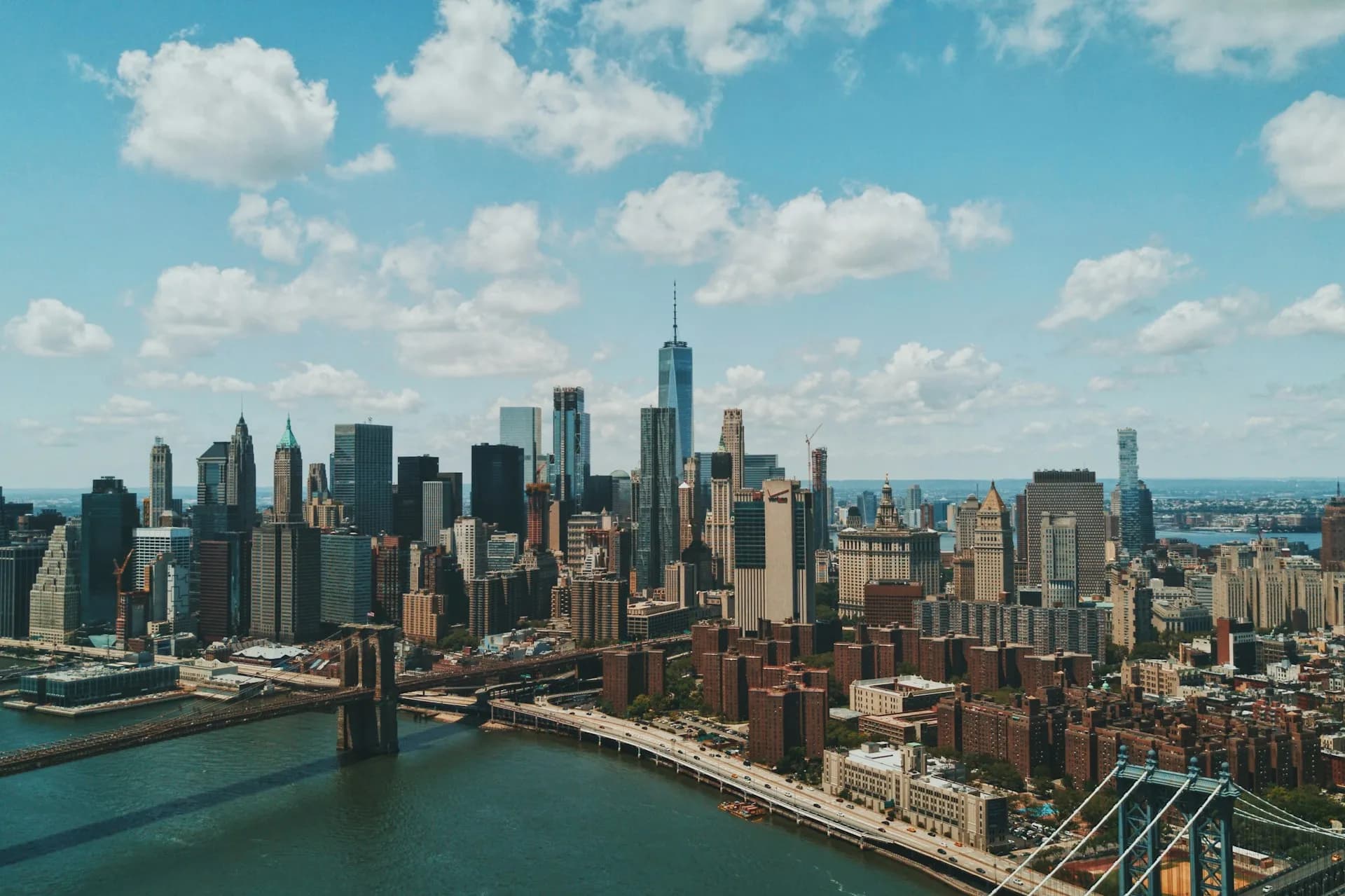
New York City skyline with Statue of Liberty

New York

New York City skyline with Statue of Liberty

Photo by Patrick Tomasso

About New York

New York City, the vibrant metropolis that never sleeps, is a cultural melting pot where towering skyscrapers meet world-class museums and diverse neighborhoods. From the iconic Statue of Liberty and bustling Times Square to the serene Central Park and renowned Broadway theaters, NYC offers an unparalleled urban experience. The city's efficient subway system, rich history, and dynamic energy make it perfect for exploring on foot or by public transport. Whether you're interested in art, history, theater, or cuisine, New York's fast-paced atmosphere and endless possibilities will captivate visitors from around the world.

When to Visit

Jan
39 ºF / 4 ºC
6 days of rain
Low
Feb
43 ºF / 6 ºC
4 days of rain
Low
Mar
54 ºF / 12 ºC
7 days of rain
Moderate
Apr
63 ºF / 17 ºC
10 days of rain
Busy
May
72 ºF / 22 ºC
12 days of rain
Busy
Jun
81 ºF / 27 ºC
11 days of rain
Very busy
Jul
86 ºF / 30 ºC
14 days of rain
Very busy
Aug
84 ºF / 29 ºC
12 days of rain
Busy
Sep
77 ºF / 25 ºC
9 days of rain
Busy
Oct
68 ºF / 20 ºC
9 days of rain
Busy
Nov
55 ºF / 13 ºC
7 days of rain
Moderate
Dec
45 ºF / 7 ºC
8 days of rain
Very busy

Things to Do in New York

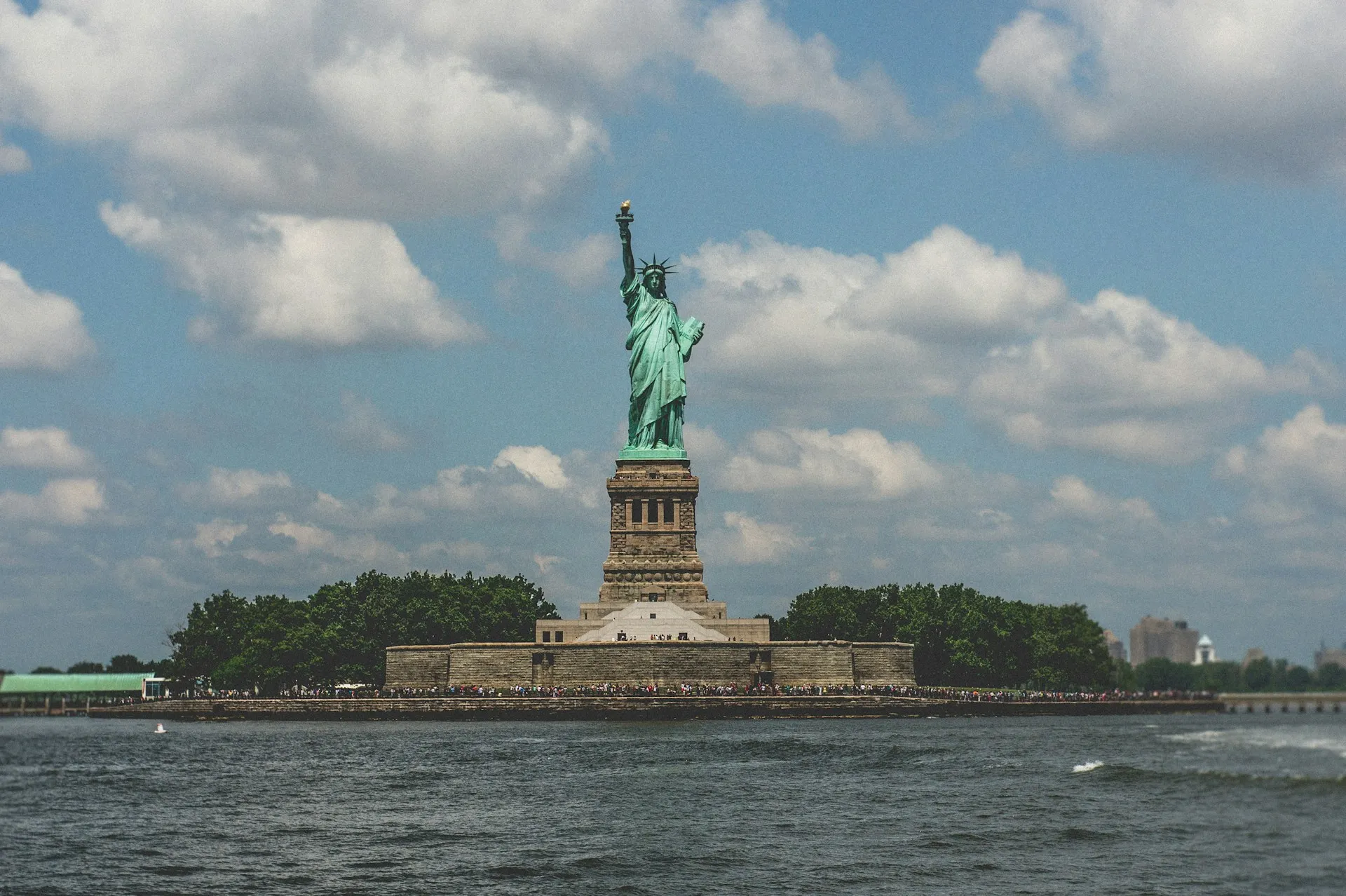
Statue of Liberty, New York
🏛️

Statue of Liberty & Lower Manhattan

Start in Battery Park for harbor views, then explore Wall Street, the Charging Bull, the New York Stock Exchange, and the 9/11 Memorial area for one of the city's strongest history walks.

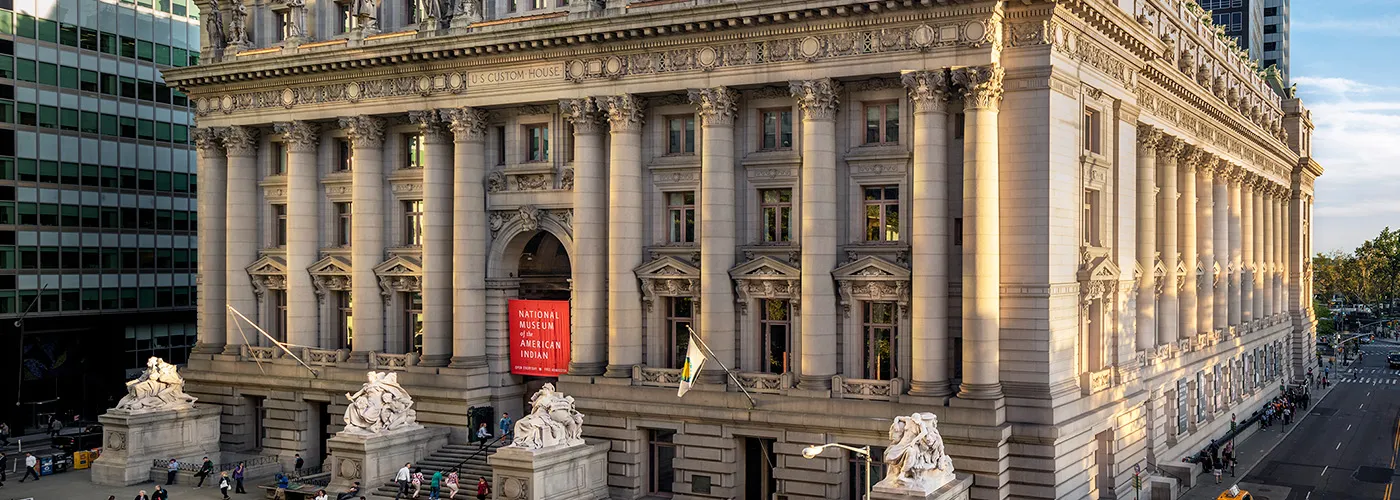
National Museum of the American Indian, New York
🏺

National Museum of the American Indian

Visit this Smithsonian museum inside the Alexander Hamilton U.S. Custom House to see Native American collections and one of Lower Manhattan's most impressive historic interiors.

Tribeca, New York
🍽️

Tribeca Dining & Evening Walks

Spend an evening in Tribeca for good restaurants, cobblestone streets, and a quieter downtown atmosphere that feels very different from Midtown's pace.

The Metropolitan Museum of Art, New York
🎨

The Metropolitan Museum of Art

The Met is one of New York's essential cultural stops, with major collections ranging from European painting to Egyptian artifacts and enough scale to fill half a day.

Central Park, New York
🌳

Central Park

Walk through Central Park to spots like Bethesda Terrace and Strawberry Fields for a break from the traffic and one of the easiest ways to balance a museum-heavy day.

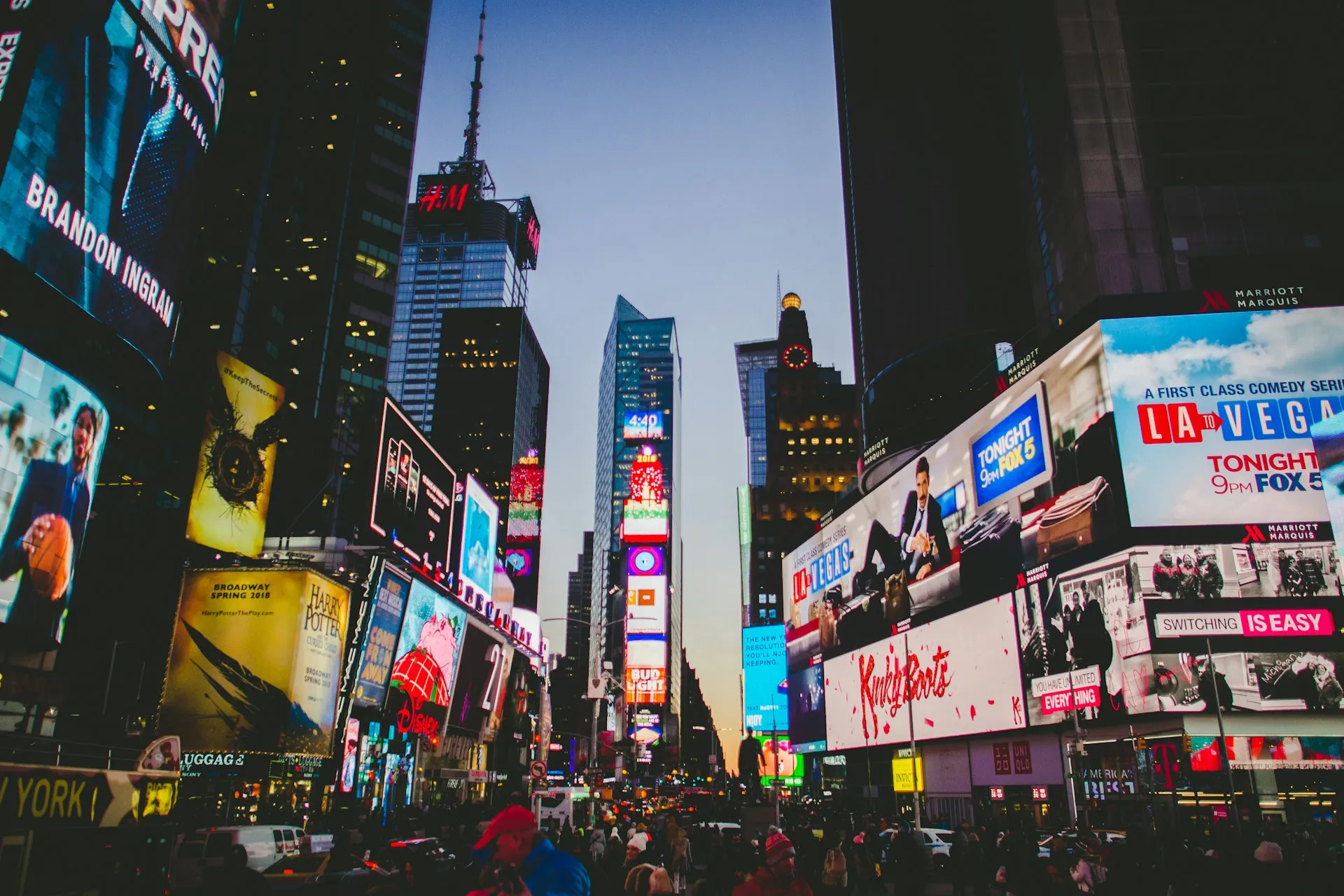
Times Square, New York
🎭

Broadway & Times Square

See Times Square after dark and pair it with a Broadway show for one of the classic first-time New York experiences, especially if you book popular productions ahead.

New York Itineraries

New York FAQ

April to June and September to early November are usually the best times to visit New York City. You get good walking weather, active neighborhoods, and fewer weather extremes than midsummer or midwinter.

Most first-time visitors need at least 3 to 5 days in New York. That gives you enough time for major sights like Central Park, Lower Manhattan, one or two museums, and a Broadway night without rushing every day.

The best way to get around New York City is by subway plus walking. Use the subway for longer jumps between downtown, Midtown, and Uptown, then explore each neighborhood on foot once you arrive.

Yes, booking ahead is smart for the Statue of Liberty, the 9/11 Museum, observation decks, and Broadway shows. Timed-entry attractions and popular evening performances can sell out, especially in spring, summer, and December.

New York is walkable in neighborhood-sized chunks, but not as one continuous city-center walk. Expect a lot of steps each day and use the subway when moving between areas like Lower Manhattan, Midtown, and the Upper East Side.

New York can be expensive, especially for hotels, Broadway tickets, and observation decks. You can control costs by mixing paid highlights with free stops like Central Park, Battery Park, neighborhood walks, and budget food such as bagels, pizza slices, and deli sandwiches.

Yes, New York City is generally safe in the main visitor areas with normal big-city awareness. Keep valuables secure, stay alert on late-night subway rides, and use licensed taxis or rideshares when needed.

Midtown is the easiest base for first-time visitors because it gives you strong subway connections and quick access to Broadway, Central Park, and major sights. Lower Manhattan works well for a calmer stay, while the Upper West Side is a good option if you want a more residential feel.

No, you usually do not need much cash in New York City because cards and contactless payments are accepted almost everywhere. Carry a little cash only for tips, backup, or small vendors.