
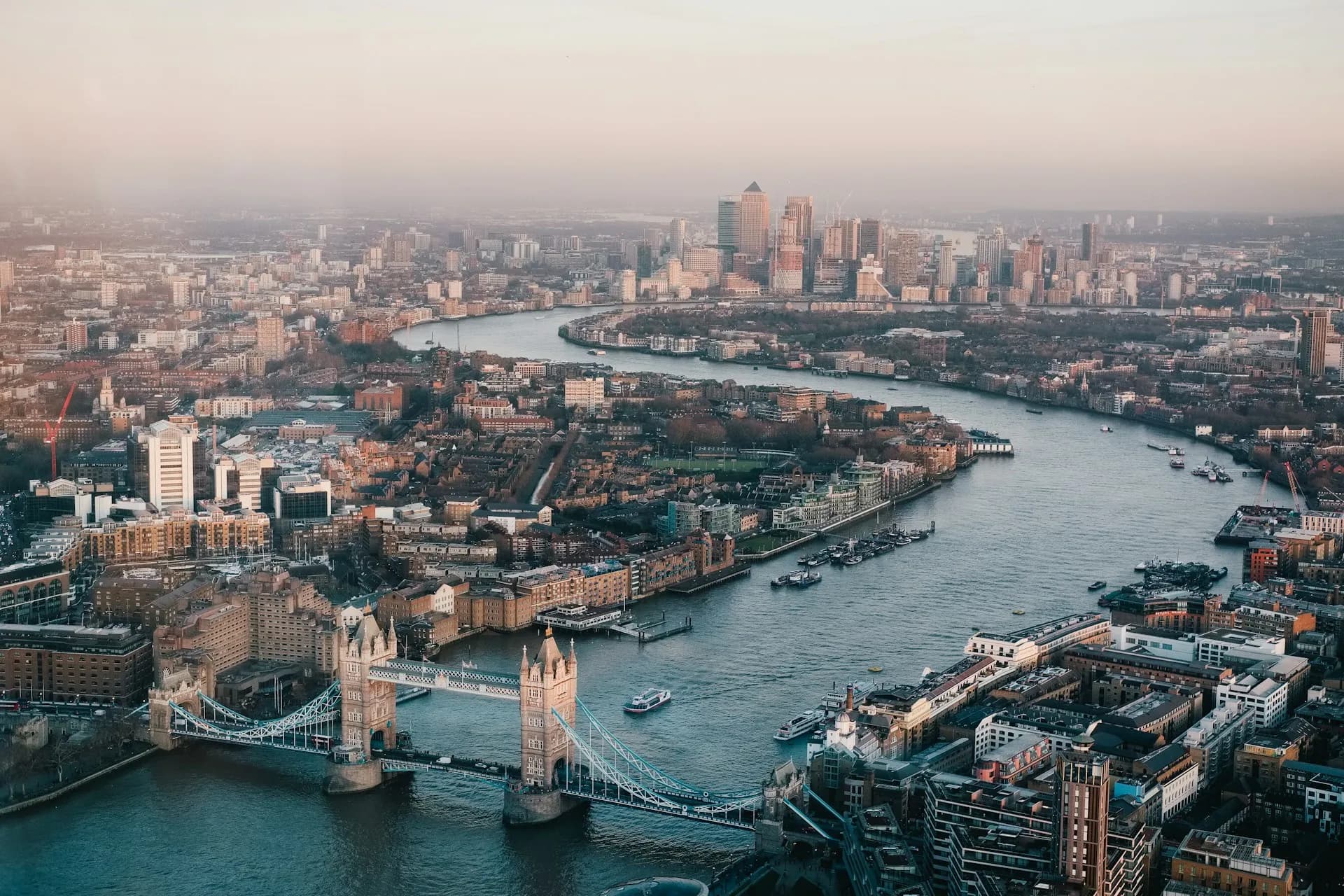
London skyline with Tower Bridge

London

London skyline with Tower Bridge

Photo by Benjamin Davies

About London

London, the vibrant capital of England, is a city where history seamlessly blends with modernity. From the iconic Big Ben and the majestic Tower Bridge to world-class museums and bustling markets, London offers an unparalleled cultural experience. The city's rich royal heritage, diverse neighborhoods, and excellent public transport system make it perfect for exploring on foot or by tube. Whether you're interested in art, history, theater, or cuisine, London's dynamic atmosphere and timeless charm will captivate visitors from around the world.

Where to Stay in London

London areas feel different street by street, so picking the right base can save you lots of commute time and headaches.

Soho

Best for: First-timers who want to be in the middle of everything

You can walk to key sights like Leicester Square and Piccadilly Circus, and you’re surrounded by theatres, late-night eats, and easy Tube links (Oxford Circus and Tottenham Court Road are nearby). It’s lively without needing long travel days, but expect noise on weekend evenings.

South Bank (near Waterloo and Westminster)

Best for: Sightseeing and scenic strolls

This is a great hub for iconic landmarks like the London Eye, Westminster, and Shakespeare’s Globe, all tied together by the riverfront walk. Transport is straightforward with Waterloo and Westminster stations, plus lots of buses if you want a slower pace.

Kensington

Best for: Families and calmer evenings

Kensington feels more residential, with easy access to museums like the Natural History Museum and the Science Museum, plus parks such as Kensington Gardens. It’s a good choice if you want a quieter night than central nightlife, while still staying well connected via the District and Circle lines.

Camden

Best for: Nightlife and quirky, local vibes

Camden is all about music venues, markets, and the Camden Lock area, so it suits travellers who want an energetic evening and something different from classic London. You’re well served by the Northern line (Camden Town) and you can reach central sights quickly by Tube or overground trains.

Paddington (and Bayswater nearby)

Best for: Budget-conscious travellers who still want convenience

Paddington is practical because it has major transport links, including the Heathrow Express and multiple Tube lines, making day trips and airport transfers painless. The vibe is less flashy than Soho but still walkable for parks and shopping, especially around Bayswater’s streets.

When to Visit

Jan
45 ºF / 7 ºC
10 days of rain
Low
Feb
50 ºF / 10 ºC
12 days of rain
Low
Mar
54 ºF / 12 ºC
13 days of rain
Moderate
Apr
57 ºF / 14 ºC
9 days of rain
Busy
May
64 ºF / 18 ºC
15 days of rain
Busy
Jun
72 ºF / 22 ºC
10 days of rain
Very busy
Jul
73 ºF / 23 ºC
15 days of rain
Very busy
Aug
73 ºF / 23 ºC
9 days of rain
Very busy
Sep
68 ºF / 20 ºC
13 days of rain
Busy
Oct
61 ºF / 16 ºC
14 days of rain
Moderate
Nov
52 ºF / 11 ºC
12 days of rain
Moderate
Dec
48 ºF / 9 ºC
13 days of rain
Busy

Things to Do in London

Buckingham Palace in London

Buckingham Palace

Buckingham Palace is a working royal palace, so the public experience is seasonal and focused on the State Rooms rather than a year-round open-house visit. The main draw is seeing the official ceremonial rooms used for receptions and state occasions.

Westminster Abbey in London

Westminster Abbey

Westminster Abbey is a working, inclusive church and the UK’s coronation church since 1066. Visitors come for the Gothic architecture, the shrine of Edward the Confessor, royal tombs, and the concentration of memorials and burials tied to British history.

British Museum in London

British Museum

The British Museum is a free, high-demand London museum with broad global collections. For a first visit, the official site frames it as a place to explore human history across continents, with very large collections and free general admission.

Covent Garden in London

Covent Garden

Covent Garden is an open-air West End destination centered on the Piazza and Market Building, with heritage architecture, the Apple Market, street performers, dining, and shopping. The official site frames it as a place for browsing, eating, theatre-going, and seasonal visits.

Tower of London in London

Tower of London

Core draw is the Crown Jewels plus the Tower’s layered fortress/palace/prison history. The official site also highlights the Ravens, the White Tower, medieval spaces, battlements, and guided/seasonal experiences.

Explore all things to do in LondonView all place guides

London Itineraries

London FAQ

For most travelers, the best time to visit London is April to June or September to October. Those months usually give you milder weather and easier sightseeing conditions than peak summer, while still keeping parks, markets, and walking routes enjoyable.

Three to five days is a strong baseline for a first London trip. That is enough time for major landmarks like Buckingham Palace, Westminster Abbey, the Tower of London, a museum, a market stop, and at least one West End evening without rushing every day.

Yes for the most popular sights. The Tower of London, Westminster Abbey, the London Eye, Thames cruises, and West End shows are much easier when booked ahead, especially for weekends, school holidays, and summer travel.

Yes, London is very walkable when you explore it in neighborhood clusters such as Westminster, Covent Garden, Soho, or the South Bank. For longer hops, use the Tube or buses so you do not waste time crossing the city on foot.

Most first-time visitors should just use contactless payment. Contactless cards and mobile wallets usually give the same capped fares as Oyster, and tapping in and out is simpler than buying a separate transit card.

Covent Garden, South Bank, Westminster, and parts of Soho are practical bases for a first visit. They keep you close to major sights, good transport links, and plenty of restaurants without forcing long daily commutes.

London can be expensive, but it is manageable if you mix paid attractions with free museums, parks, and markets. A reasonable mid-range daily sightseeing budget is often around the same level shown in the itinerary content, with transport kept lower if you cluster your plans well.

London is generally safe for tourists with normal big-city awareness. Keep phones and wallets secure on crowded transport, stay alert around busy stations and nightlife areas, and use licensed taxis or rideshares if you are heading back late at night.
London Travel Guide – Itineraries, When to Visit & Things To Do